


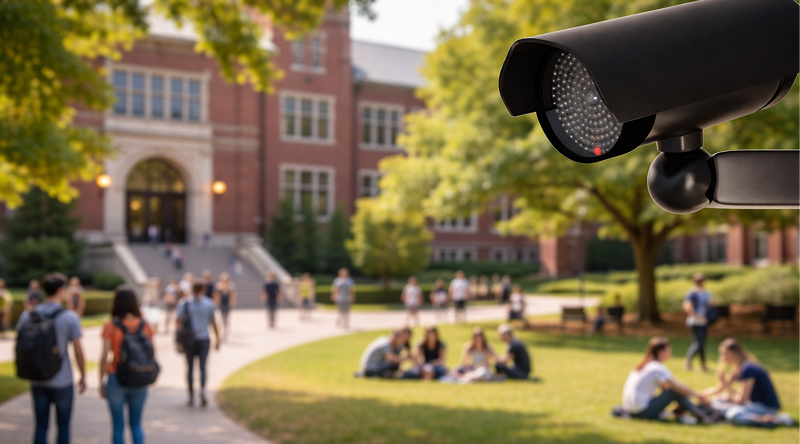
Walk across almost any college campus and you’ll notice something:
It’s open. Accessible. Designed for movement and community.
That’s what makes campuses great—but it also makes security incredibly complex.
And in many cases, the systems in place haven’t evolved fast enough.
The Challenge No One Talks About
Universities aren’t like office buildings.
They can’t just lock everything down.
They have to balance:
- openness
- accessibility
- safety
That’s not easy—and it’s why many campuses end up with fragmented systems.
What We Typically See
Across campuses, security systems are often:
- installed at different times
- managed by different departments
- built on different platforms
- not integrated with each other
Which means when something happens:
- data is hard to access
- video is hard to find
- response is slower than it should be
Why “Rip and Replace” Doesn’t Work
Here’s the reality most campuses face:
👉 They can’t just replace everything.
Budget cycles, procurement timelines, and existing infrastructure make full system replacement unrealistic.
So instead, systems get layered on top of each other over time—creating even more complexity.
A Smarter Approach: Bringing Legacy Systems into One Platform
What we’re seeing across forward-thinking campuses is a different approach:
👉 Unifying existing systems into a single AI-powered command platform
Instead of replacing every camera or system, universities can:
- integrate legacy cameras into modern platforms
- centralize video access across multiple systems
- apply AI analytics to existing infrastructure
- create a single interface for monitoring and investigation
This allows campuses to modernize without starting from scratch.
Why This Changes Everything
When legacy systems are pulled into a unified platform:
- security teams don’t have to jump between systems
- video can be searched and reviewed more quickly
- AI can flag events across all connected cameras
- campuses gain real-time situational awareness
And most importantly—it aligns with how campuses actually operate:
- phased budgets
- multi-year upgrades
- evolving infrastructure
The Role of Integration Moving Forward
More universities—especially in markets like Kansas City—are moving toward:
👉 connected ecosystems instead of standalone systems
Where:
- video surveillance
- access control
- emergency communication
- and legacy infrastructure
all work together.
The Bottom Line
The best campus security systems in Kansas City aren’t about replacing everything overnight.
They’re about building a smarter, more connected environment—one that brings existing systems forward, leverages modern AI capabilities, and improves safety without disrupting how campuses function.